New Zealand
The LuminariesNew Zealand in the novel is at once a distant destination, a lived landscape, and a contested source of wealth. Its goldfields draw people across oceans with the promise of reinvention, but the fortune they seek is inseparable from the Crown’s acquisition of Indigenous land. For Walter Moody, arrival overturns an inherited picture of the colony; for Te Rau Tauwhare, the West Coast is not vacant territory or a resource to be converted into money, but a homeland whose ownership has already been taken from his people.
An imagined colony, encountered in practice
Before reaching New Zealand, Walter Moody’s ideas about its diggings are imprecise. They come chiefly from sketches of the California goldfields: log cabins, dusty valleys, and wagons. He also carries a vague impression of the colony as an unformed, supposedly savage reverse of the British Empire’s center. That picture begins to fail when he rounds the Otago Peninsula and sees mansions on hills, quays, streets, and planned gardens. In the same encounter, a well-dressed man passes his matches to a Chinese man and leans across him to retrieve a glass. The scene unsettles Moody’s assumptions about both the colony’s development and the social distinctions he expects to find there.
Moody’s response reflects his own background. Born in Edinburgh to a modest fortune, educated at Cambridge and the Inner Temple, he is accustomed to understanding social systems from above. He supports the merging of classes in theory, yet remains startled when he sees people of different origins sharing the same space. The goldfields make his inherited categories difficult to apply: each newcomer is foreign to the next, and each is foreign to the soil. In New Zealand, he must encounter social mixture as a condition of life rather than an abstract argument.
Routes to the goldfields
The country’s promise is carried along routes that connect it to other gold-producing regions. Thomas Balfour’s path has taken him from an apprenticeship in glassmaking to a factory of his own, then into coalmining and investment. He sells his mining interests to London investors, travels to California, and builds wealth through bank shares and hotels. When California’s fields dry up, he moves to Victoria and then on to New Zealand, following the continuing prospect of new discoveries. His successive departures make the gold rush a repeating cycle of hope, sale, and relocation rather than a single destination.
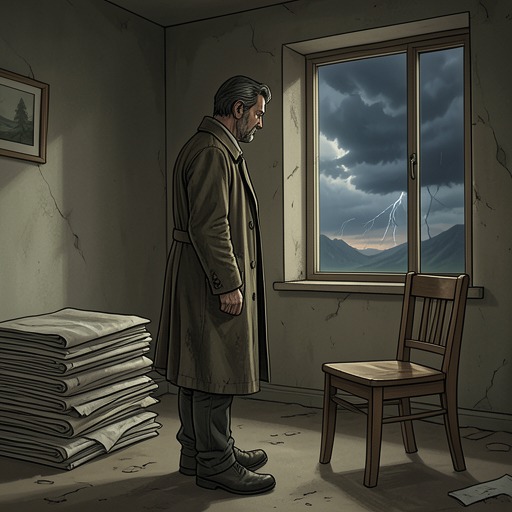
Moody reaches the West Coast by a different route. After landing at Dunedin, he learns that Otago’s gold has been eclipsed by new findings on the Coast. His voyage north from Port Chalmers aboard the Godspeed turns back south toward the diggings, tracing a hairpin route around the island. As the vessel rounds the northern spit, the falling barometer and a violent storm bring the danger of the passage into view. Drowning is known as a West Coast hazard, and many prospectors are lost before they reach the fields. The crossing therefore tests the promise of arrival against the possibility that the journey itself will prevent it.
New Zealand also unsettles Moody through its sky. On first landing at Dunedin, he searches for familiar northern constellations and tries to locate the Pole Star, only to find the patterns inverted and no equivalent star marking the pole. Orion and Canis Major appear upside down; the Southern Cross offers a new point of reference, though Moody cannot recall how to use it. The unfamiliar heavens give physical form to his disorientation: the country lies beyond the frame through which he has learned to read the world.
Gold, purchase, and dispossession
The West Coast’s mining economy has a prior history: the Crown’s purchase of Poutini Ngāi Tahu land. Six years before the events recounted, the British Crown acquired an extensive tract of the western South Island for three hundred pounds. Poutini Ngāi Tahu retained the Arahura River, parts of its banks, and a small parcel at Mawhera, at the mouth of the Grey River. The people had considered the agreement unfair; in the years that followed, the scale of the land’s value made its injustice unmistakable. Thousands of diggers bought prospecting licences for a pound each and land at ten shillings an acre, while the gold in the rivers and sands represented a wealth too vast to have been fully calculated.
Crosbie Wells’s property in the Arahura Valley shows how that change becomes an individual transaction. He pays fifty pounds to the Crown for one hundred rolling acres at the valley’s eastern end, bordering land to which Poutini Ngāi Tahu has been confined. Wells builds a one-room cottage overlooking the river, clears a garden, and begins a timber mill. His purchase is legally recognized, but its legitimacy sits within the larger transfer that made the land available for sale in the first place.
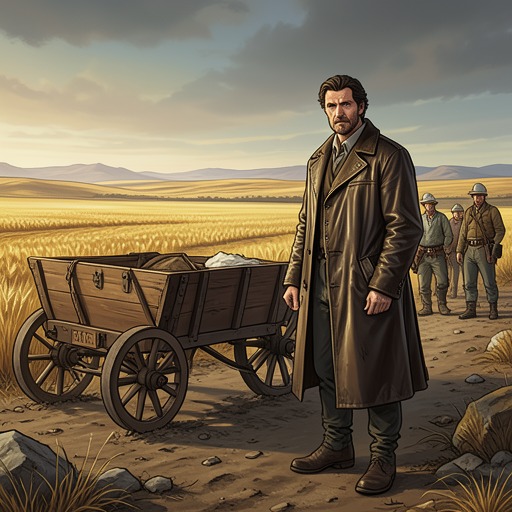
Te Rau Tauwhare’s view of the same valley exposes the gap between legal title and belonging. He travels the Coast and knows its rivers, valleys, beaches, and mountains through repeated use and intimate knowledge. The Arahura is central to his sense of the region, and Wells’s cottage occupies a place in that landscape he cannot simply regard as property for exchange. When Edgar Clinch buys Wells’s acreage, Tauwhare questions what the purchaser means to do with it: Clinch has not walked its perimeter or worked the land, and has arranged for Wells’s cottage to be stripped of saleable effects. To Tauwhare, profit without labor or attachment is an empty return. The land cannot be minted as currency; it can only be lived upon and loved.
A frontier that resists old maps
The country’s gold rush brings people and fortunes together while making ownership and identity unstable. The Coast attracts men like Balfour, who welcomes ambition and the untested promise of newcomers, and Moody, whose own journey begins with the intention of finding his missing brother and informing him of changes in their family. Their reasons for coming differ, but both are caught within a society remade by movement and mining. The wealth of the fields can overturn prior expectations, even as its distribution depends on legal arrangements that exclude those whose land contains it.
New Zealand thus changes the meaning of arrival. For Moody, it is a place where familiar social and celestial coordinates fail and must be learned anew. For Balfour, it is the next field in a long sequence of ventures. For Tauwhare, the Coast is already known, and the language of discovery obscures an older relationship to the land. By placing the gold rush’s promise beside the transactions that enable it, the novel makes the frontier not an empty beginning, but a place where competing histories of possession, use, and belonging meet.